

Start with the Room, Not the Ideas Board
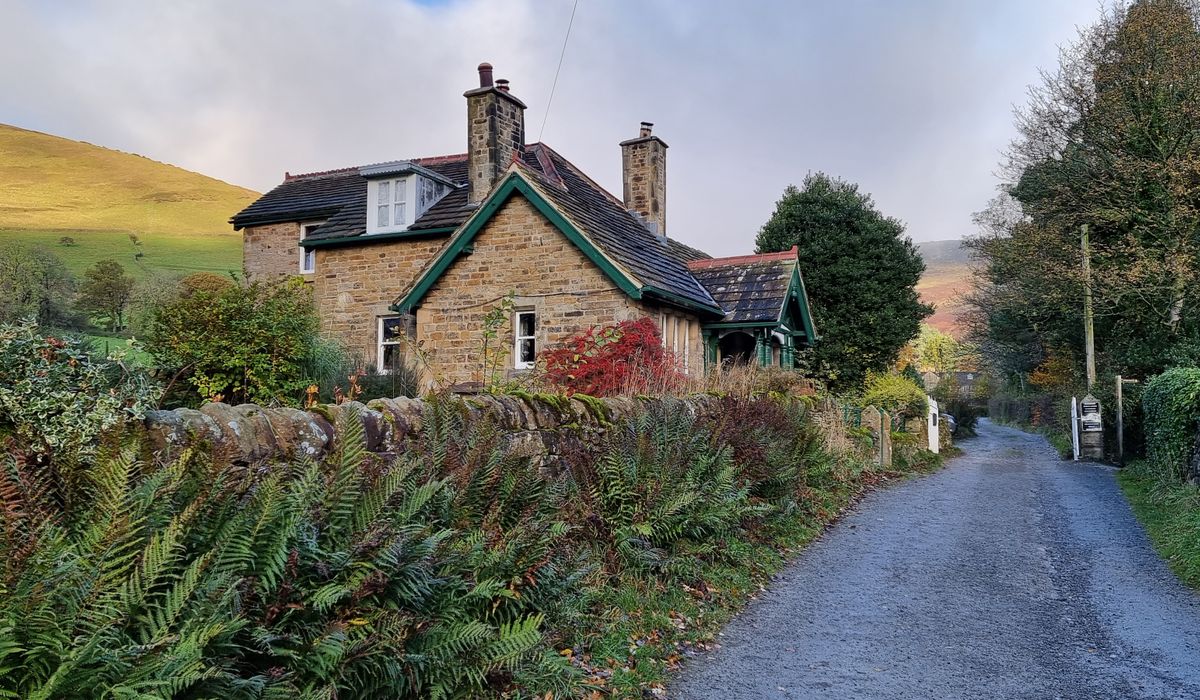
A stone cottage kitchen rarely hands you a clean rectangle. Walls bow and lean, ceilings follow the line of old beams, and floors have usually settled an inch or two over two centuries. Before you order a single cabinet, spend a careful afternoon measuring. Check the width of the room at skirting level, at worktop height and again just below the ceiling — the three figures will not match. Note how far the window reveals project, where the chimney breast falls, and whether there is an old inglenook worth reopening.
Those quirks are not problems to be flattened out. A range tucked into a chimney breast, a run of units that follows a gently sloping wall, a dresser sitting snugly in an alcove — these are the details that make a cottage kitchen feel as though it belongs. Work with the room and it will repay you. Fight it, and every awkward joint will show for years.
Plan the Layout Around the Work
Good cottage kitchens are planned around movement rather than symmetry. Aim for a clear span of at least 1.1 metres between facing runs if you can manage it; below a metre, two people cannot pass without a shuffle and a muttered apology. Keep the sink, cooker and fridge within a few paces of one another, but resist cramming them into a tight triangle just because the room is small. A slightly wider arrangement often suits a household with two cooks far better.
A few rules that hold up well in older rooms:
- Put the sink under a window where possible, so you look out while you wash up.
- Position the cooker so the oven door opens without blocking a doorway or a walkway.
- Leave at least 800mm of clear worktop between the sink and the hob — this becomes your main prep space.
- Keep the fridge away from external stone walls unless you leave a ventilation gap behind it.
Storage That Earns Its Place
In a room this size, every cupboard has to justify itself. As a rough guide, pan drawers below worktop level give you far more usable space than a base unit with a single shelf. You can see everything at a glance, and nothing vanishes to the back. A 900mm-wide drawer bank beside the cooker will take pans, casseroles and roasting tins without a scrabble.
Think vertically too. Cottage ceilings are often lower than expected, but the space above head height is still yours. A run of tall units at 2.2 to 2.4 metres, or open shelves carried right up to the ceiling, will absorb the bulk of your crockery and dry goods. A proper larder cupboard — 600mm deep, with pull-out baskets and a couple of internal drawers — is worth more than three wall cupboards put together.
Two further tricks are worth knowing:
- Slim pull-out racks either side of the cooker hold oils, spices and utensils in barely 150mm of space.
- Kickboard drawers, 100 to 150mm deep, take baking trays, flat tins and tea towels.
The Details That Make It a Country Kitchen
A deep ceramic butler sink sits at the heart of the traditional country kitchen, and for good reason: it takes a stockpot, a bundle of leeks and a muddy pair of wellington boots without complaint. Be aware that it needs a reinforced or bespoke base unit, that it is heavy enough to require a sturdy frame, and that the apron front sits proud of the cabinet line, so allow 700 to 750mm of worktop depth. A single generous bowl usually serves better than a cramped double. Pair it with a traditional bridge mixer, and consider a separate filtered tap so you are not running the main tap for drinking water.
Open shelving works beautifully in stone rooms, but only when it is disciplined. Boards of 22 to 25mm thickness, 250 to 300mm deep, fixed to battens screwed into studs, with 350 to 400mm between shelves, look generous rather than mean. Keep one or two runs only, and reserve them for everyday china, jugs and glass jars — the things you actually reach for. A shelf that becomes a dumping ground is worse than a cupboard door.
A dresser is the piece that anchors the whole room. Look for something around 1.8 metres wide, with a base 450mm deep and upper shelves of 300mm and 250mm. Site it against a solid wall, well away from the heat and steam of the range, and paint it either in the same colour as the units or one shade deeper for quiet contrast.
Materials, Colours and Surfaces
Oiled oak worktops bring instant warmth and take a knock gracefully, though they need re-oiling two or three times a year. Near the sink, a honed stone or quartz surface is more forgiving. Mixing the two is perfectly acceptable and often the most practical answer.
For cabinet fronts, in-frame Shaker doors suit stone walls better than anything glossy or fussy. Paint them in a warm neutral — soft sage, oatmeal, a deep blue-grey, or a muted ochre — in a wipeable eggshell. Floors are best kept simple: flagstone, quarry tile or reclaimed brick, softened with a couple of washable rugs where you stand most.
On the walls, lime plaster with a breathable paint lets an old stone building manage moisture as it always has. Tongue-and-groove panelling to dado height protects against scuffs and looks entirely at home.
Light, Warmth and the Finishing Touches
Layer your lighting rather than relying on a grid of downlights. Warm white bulbs at around 2700K flatter stone and timber far better than cool white. Use a strip beneath the wall cabinets to light the worktop, pendants over a table or island, and a pair of wall lights on the beams for evenings. Put everything on dimmers if you can.
Finally, leave room for the things that make a kitchen lived-in: a peg rail for aprons and mugs, a plate rack, a bowl of lemons, a chair pulled up to the end of the table. A country kitchen should feel generous and slightly worn, not showroom-perfect. Get the storage right, keep the details honest, and the room will look after itself for decades.





John Doe
14 January, 2022Having no content in post should have adverse..
Chauffina Carr
10 April, 2022We use these tests all time! Killer stuff!
Jim Séchen
16 July, 2022Thanks for all the comments, everyone!